The DFT methods are mature. The tooling around them wasn't.
Qchemvyx encodes 15 years of computational chemistry workflow knowledge — basis set selection heuristics, job retry logic, output parsing conventions, TS convergence strategies — into a single platform so researchers don't have to.

Why we built this
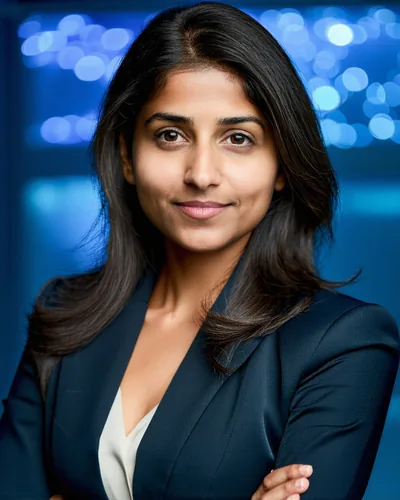
My PhD was in computational chemistry — transition metal catalysis, specifically. Then a postdoc extending that work. Then three years in R&D at a specialty chemicals company, running production DFT studies to support synthesis decisions.
At each stop, the pattern was the same: the quantum chemistry was mature. B3LYP has been well-validated since the mid-1990s; NEB for transition state search has been standard practice for over twenty years. What hadn't changed was the layer underneath — every group writes their own SLURM submission scripts, their own basis set selection logic, their own post-processing Python to parse Gaussian or ORCA output. These are solved problems that each group solves separately, badly, once a year when the cluster scheduler changes and the scripts break.
At the specialty chemicals company, I watched the process chemistry team wait four days for a single batch of DFT scans to clear the HPC queue. The queue was shared with seven other groups. Nobody could run more than five or six candidates at a time without blocking everyone else. We had 400 candidates in the design space.
Qchemvyx is the platform I wish existed then. SMILES in, ranked energy profiles out. The fifteen years of workflow knowledge — which functionals to use for which metal centers, how to handle SCF convergence failures, how to set up NEB images for multi-step mechanisms — is encoded in the platform, not scattered across a dozen lab group wikis.
Qchemvyx accelerates the computational screening phase. The experimental validation in the fume hood remains essential — and our job is to make sure the right candidates arrive there.
— Preethi Sundaram, CEO & Co-founder
Principles we build around
Accuracy is not optional
We publish MAE benchmarks against CCSD(T) reference data on every functional we support. Speed is important. Correctness is required.
Infrastructure should be invisible
A researcher submitting a DFT job should think about the chemistry, not the cluster. Our job is to make the infrastructure disappear.
Data belongs to the researcher
We do not train models on user calculation data. We do not sell or share molecular data with third parties. Molecular IP is one of the most competitively sensitive assets in chemistry — we treat it accordingly.
Open science where possible
Our benchmark methodology, validation datasets, and accuracy comparisons are published openly. Users should be able to independently verify the accuracy claims we make.
Built by computational chemists and engineers
Preethi Sundaram
CEO & Co-founder
PhD in computational chemistry (transition metal catalysis). Postdoc in electronic structure methods. Industry R&D at a specialty chemicals company before founding Qchemvyx in 2025.
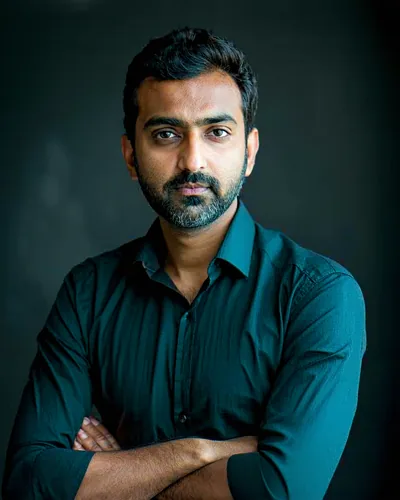
Arjun Krishnaswamy
CTO & Co-founder
Distributed systems engineer. Designed heterogeneous batch compute infrastructure at a cloud hyperscaler. Built Qchemvyx's parallel DFT job scheduler to handle variable-runtime scientific workloads at scale.

Dr. Chen Mei
Head of Science
Theoretical chemistry PhD (Caltech). Published research in DFT functional development, spin-state energetics, and GMTKN55 benchmarking.
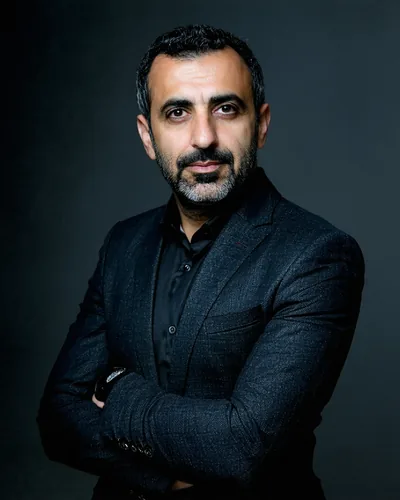
Dr. Omar Hassan
Lead Computational Chemist
Organometallic and computational chemistry. 40+ publications on transition metal catalysis, cross-coupling mechanisms, and DFT validation.